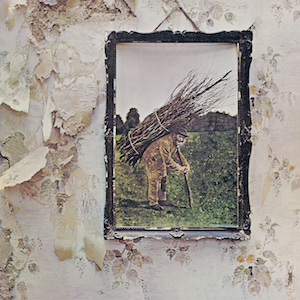
Following what was considered their third album which was considered a mild flop by some, the band needed to rebound. What they produced was arguably the greatest rock album of the 20th century.
For an album that could get away with being titled "Led Zeppelin's Greatest Hits" over 40 years later, the album was intended to initially come in under the critical radar, as the album was never designated an official title nor did it feature the band's name anywhere on the original sleeve. It almost feels like after their third record, "IV" was a way to take a step away from the hype and from the pressure of garnering positive feedback from the media at the time.
The album kicks off with "Black Dog". On this track, one of the better known riffs in Hard Rock is complimented by Robert Plant's simple couplet verse phrases and call-and-response style choruses. This track sets the tone for the rest of the album, and while there were certainly better sounding guitar tones available in the late 60s and early 70s, listening to Page's guitar on this song is a divine preview of the musicianship to come.
The rest of the first side of the album consists of "Rock and Roll", another iconic thrill ride of a rock song, Zep's ode to Tolkien "The Battle Of Evermore", and the love-it-or-hate-it "Stairway To Heaven". At this point in the album, a first time listener might wonder why the band decided to frontload the album and put all of its projected hits at the beginning. Yet, Led Zeppelin does not let up.
The opening to the second side of the record, "Misty Mountain Hop", provides another grooving, funky guitar riff accompanied by an unorthodox but infectious lead vocal. John Bonham's drum fills towards the end of this song are some of my favorites from the entire album.
"Four Sticks" is the true anomaly of this record in the sense that it is just not very well known by the casual listener. The hypnotic repetition of the guitars and the jungle backbeat give this song speaker-blasting potential. The band doesn't create a memorable chorus on this song, and the beauty of this is that they create memorable moments in the song that still manage to become trapped between the ears.
"Going To California" offers a change of pace from the previous tracks' heavy Blues Rock. This song is truly one of the band's most often forgotten and underrated hits and it helps to further demonstrate the band's versatility. The album's final track, a take on a much older blues song by Kansas Joe McCoy and Memphis Minnie, "When The Levee Breaks" is one of the most iconic drum openings in Rock history. The reverb-laden instrumentation throughout the entire arrangement helps to anchor this slow-burner in the listener's ear canal and leaves the soul wanting more.
There are few bands who could do what Led Zeppelin did on their fourth album. Today, including as many strong "hit" songs on the same record is considered career suicide by record companies, and even if it wasn't, I would wager that not many bands can produce at the level of excellence that Led Zeppelin did in the early 70s. This album is a staple in any Rock music lover's collection and in my opinion is the greatest Rock record of all time.
Rating: 10/10
Let us know what you think of this album in the comments section below!

No comments:
Post a Comment